Tu primer mazoYour first deck
Consejos para montar tu primer mazo de Yu-Gi-Oh!: por dónde empezar, cuántas cartas llevar, cómo elegir un arquetipo, cuánto cuesta y dónde practicar gratis.Tips for building your first Yu-Gi-Oh! deck: where to start, how many cards to play, choosing an archetype, what it costs and where to practise for free.
Cuando tengas las reglas más o menos claras, toca hacerte con un mazo. Estos consejos te ayudan a no gastar de más al principio.
1. Practica gratis primero
Antes de comprar nada, prueba Master Duel o Duel Links (gratis en PC, consolas y móvil). El juego aplica las reglas por ti, te enseña las Cadenas y te deja probar muchos mazos distintos. Es la mejor forma de descubrir qué estilo te gusta.
2. Empieza por una baraja de estructura
Las barajas de estructura (Structure Decks) son mazos preconstruidos de 40 o más cartas, centrados en un arquetipo y listos para jugar. Son baratas y traen las cartas principales del mazo.
Mucha gente compra 2 o 3 copias de la misma baraja para tener 3 copias de las mejores cartas y luego ajusta el mazo con cartas sueltas.
3. Elige un arquetipo que te guste
La mayoría de mazos se basan en un arquetipo. Elige uno que te guste por las ilustraciones o por cómo juega, no solo porque esté de moda: vas a verlo muchas horas. Para encontrarlos, busca un nombre en el buscador o usa el filtro de Arquetipo.
Algunos arquetipos clásicos, con cartas muy conocidas:
 Dragón Blanco de Ojos Azules
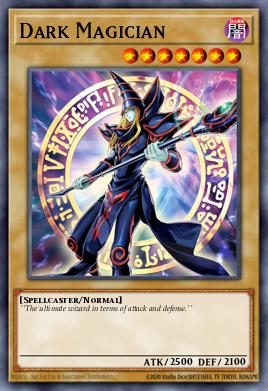 Mago Oscuro
 Dragón Negro de Ojos Rojos
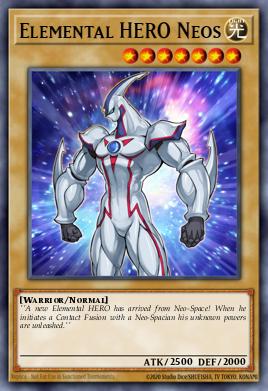 HÉROE Elemental Neos
 Ciber Dragón
 Caza del Cielo As - Raye
4. Monta el mazo
- Juega con 40 cartas. Cuantas menos cartas, más veces robas las buenas.
- Lleva 3 copias de tus cartas más importantes, y 1 o 2 de las que solo quieres ver a veces.
- No metas demasiados monstruos de Nivel alto que necesiten Sacrificios, o te quedarás con manos que no puedes jugar.
- Añade algunas cartas genéricas (staples) para defenderte, como Flor de Ceniza & Primavera Feliz o Infinito Temporal, cuando puedas conseguirlas.
- Comprueba la Lista de prohibidas antes de ir a un torneo.
5. Pruébalo con las herramientas de la web
En Mis mazos puedes montar tu mazo gratis y sin registrarte:
- Te avisa si el mazo no es válido (cartas de más, prohibidas…).
- Calcula lo que cuesta en Cardmarket y qué cartas te faltan según tu colección.
- Roba una mano de prueba para ver cómo empieza.
- La calculadora de probabilidades te dice cuántas veces abrirás con las cartas que necesitas.
- Puedes compartirlo con un enlace o una imagen, o exportarlo en
.ydkpara otros simuladores.
6. Ve a jugar
Busca una tienda de tu zona que organice torneos (las OTS, Official Tournament Stores, tienen torneos oficiales). Los locals suelen ser pequeños y la gente ayuda a los que empiezan. Pregunta sin miedo: casi todo el mundo empezó sin saber qué era una Cadena.
Once the rules make some sense, it's time to get a deck of your own. These tips will help you avoid overspending at the start.
1. Practise for free first
Before buying anything, try Master Duel or Duel Links (free on PC, consoles and mobile). The game enforces the rules for you, teaches you Chains and lets you try lots of different decks. It's the best way to find the playstyle you like.
2. Start with a Structure Deck
Structure Decks are preconstructed decks of 40+ cards built around an archetype, ready to play. They're cheap and include the deck's main cards.
Many players buy 2 or 3 copies of the same Structure Deck to get 3 copies of the best cards, then tune the deck with singles.
3. Pick an archetype you like
Most decks are built around an archetype. Pick one you like for the artwork or the way it plays, not just because it's popular: you'll be looking at it for hours. To find them, search a name in the card search or use the Archetype filter.
Some classic archetypes, with very well-known cards:
Blue-Eyes White DragonDark MagicianRed-Eyes Black DragonElemental HERO NeosCyber DragonSky Striker Ace - Raye4. Build the deck
- Play 40 cards. The fewer cards, the more often you draw the good ones.
- Run 3 copies of your most important cards, and 1 or 2 of those you only want to see sometimes.
- Don't include too many high-Level monsters that need Tributes, or you'll end up with hands you can't play.
- Add some generic cards (staples) to defend yourself, like Ash Blossom & Joyous Spring or Infinite Impermanence, when you can get them.
- Check the banlist before going to a tournament.
5. Test it with this site's tools
In My decks you can build your deck for free, no sign-up:
- It warns you if the deck isn't legal (too many copies, banned cards…).
- It works out what it costs on Cardmarket and which cards you're missing from your collection.
- Draw a test hand to see how it opens.
- The probability calculator tells you how often you'll open with the cards you need.
- Share it with a link or an image, or export it as
.ydkfor other simulators.
6. Go and play
Find a local store that runs tournaments (OTS, Official Tournament Stores, host official events). Locals are usually small and people help newcomers. Don't be afraid to ask: almost everyone started without knowing what a Chain was.